01Overview
When a load is applied slowly, the whole body adjusts together. When it is applied suddenly (an impact, a blast, an earthquake), the far parts of the body do not feel it at first: the disturbance travels through the material as a stress wave, at a finite speed, reflecting at every free end and change of section. Designing parts that survive impact means knowing how fast these waves travel, how they reflect and how they decay.
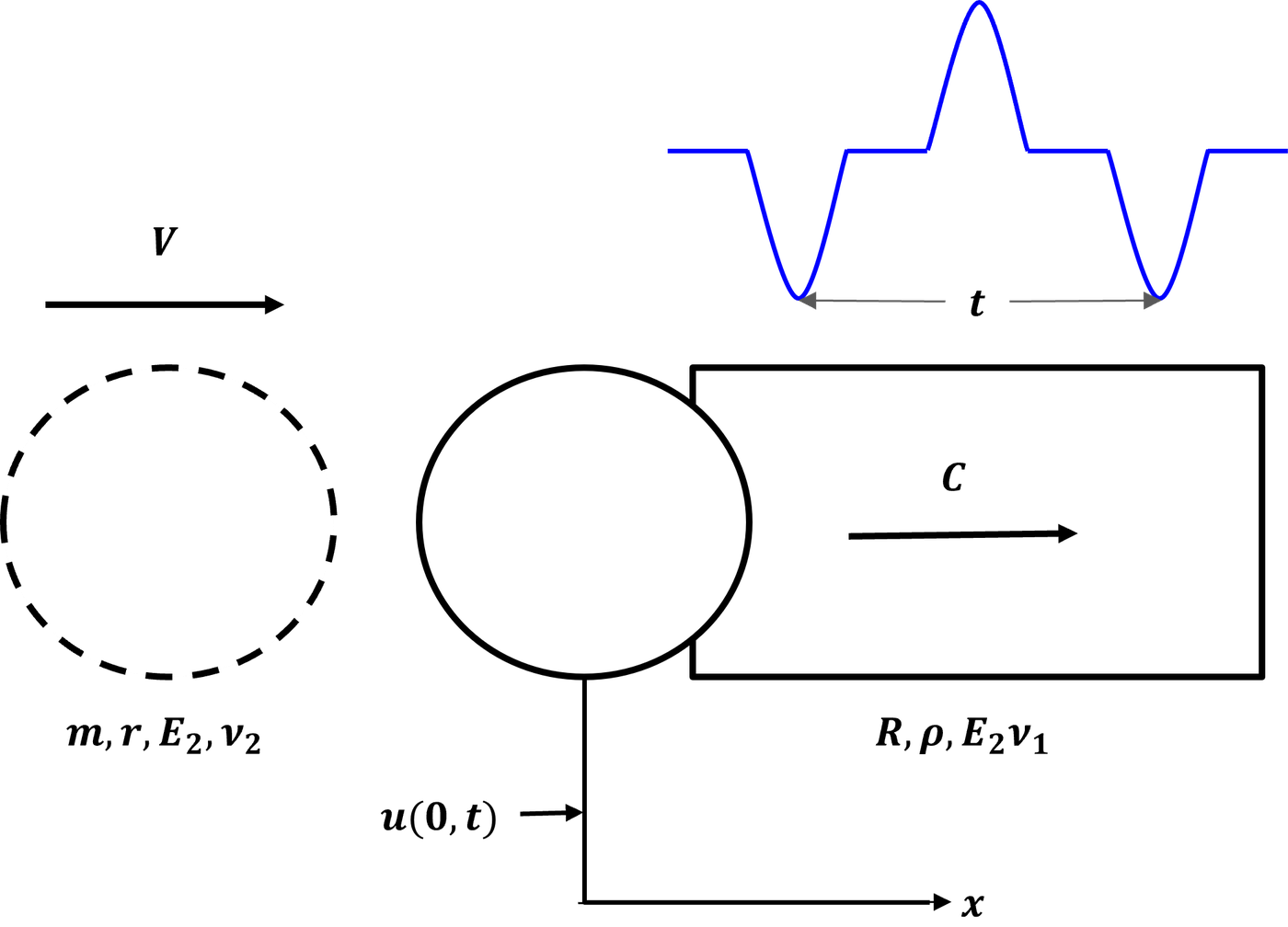
This study pairs Hertz contact theory with impact experiments on long steel bars: a ball striking a bar, a bar striking a bar, and a ball striking bars that step up or down in section.
02Body and surface waves
P-waves (primary, compressional) push and pull the material along the direction of travel and are the fastest. S-waves (secondary, shear) move it across the direction of travel and only pass through solids. Along a free surface travel Rayleigh waves, with an elliptical particle motion, and Love waves, with horizontal shear.
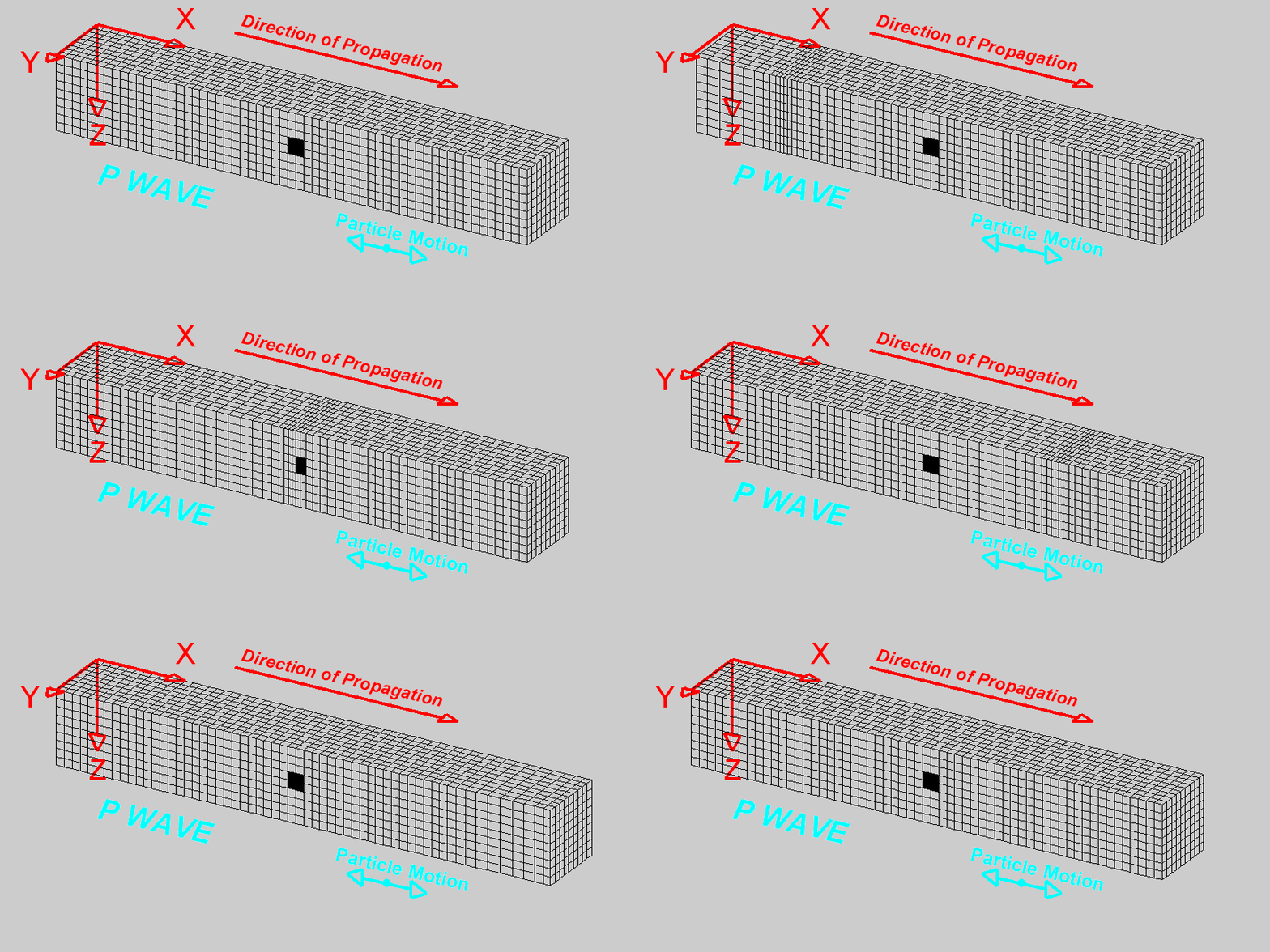
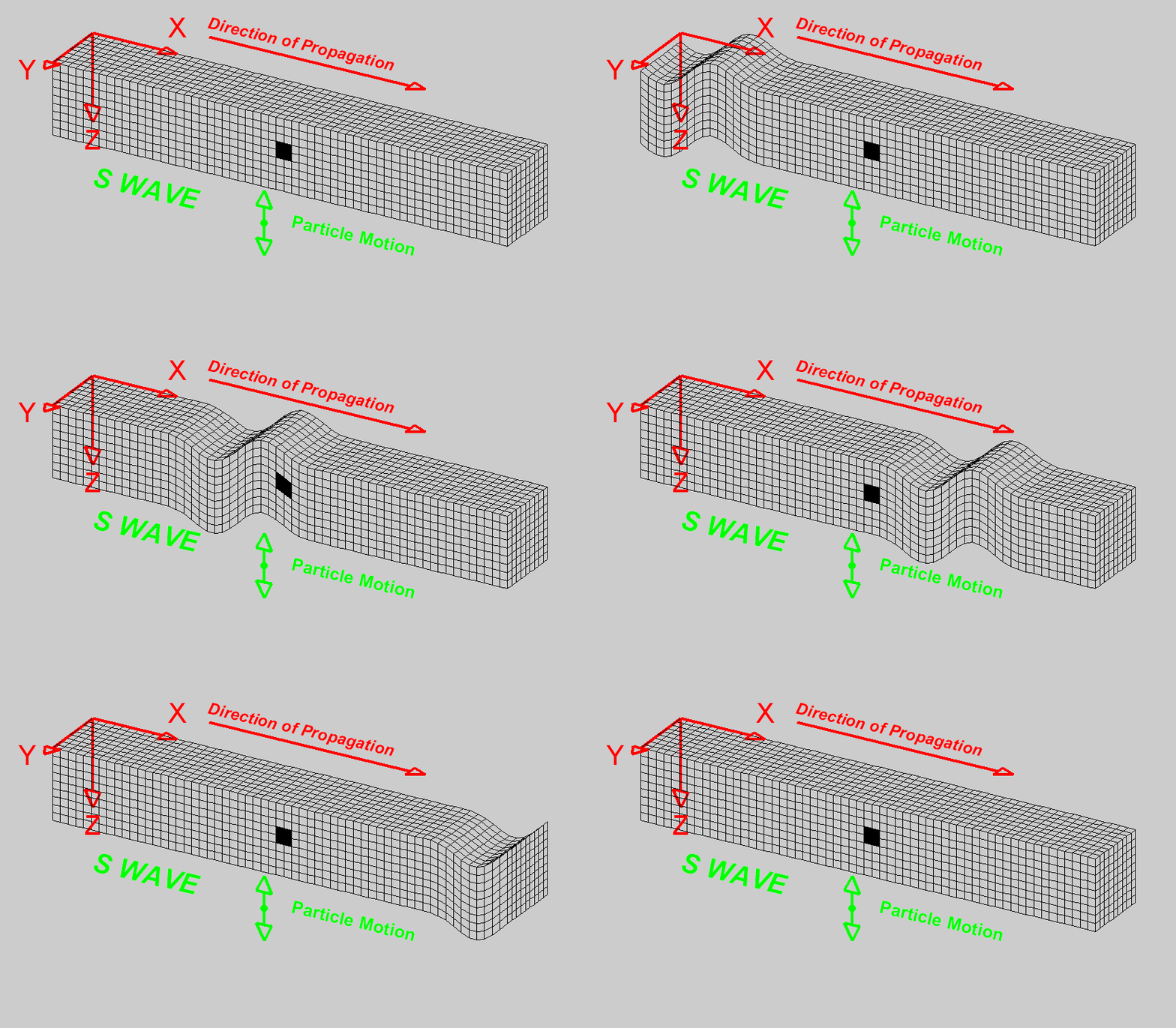
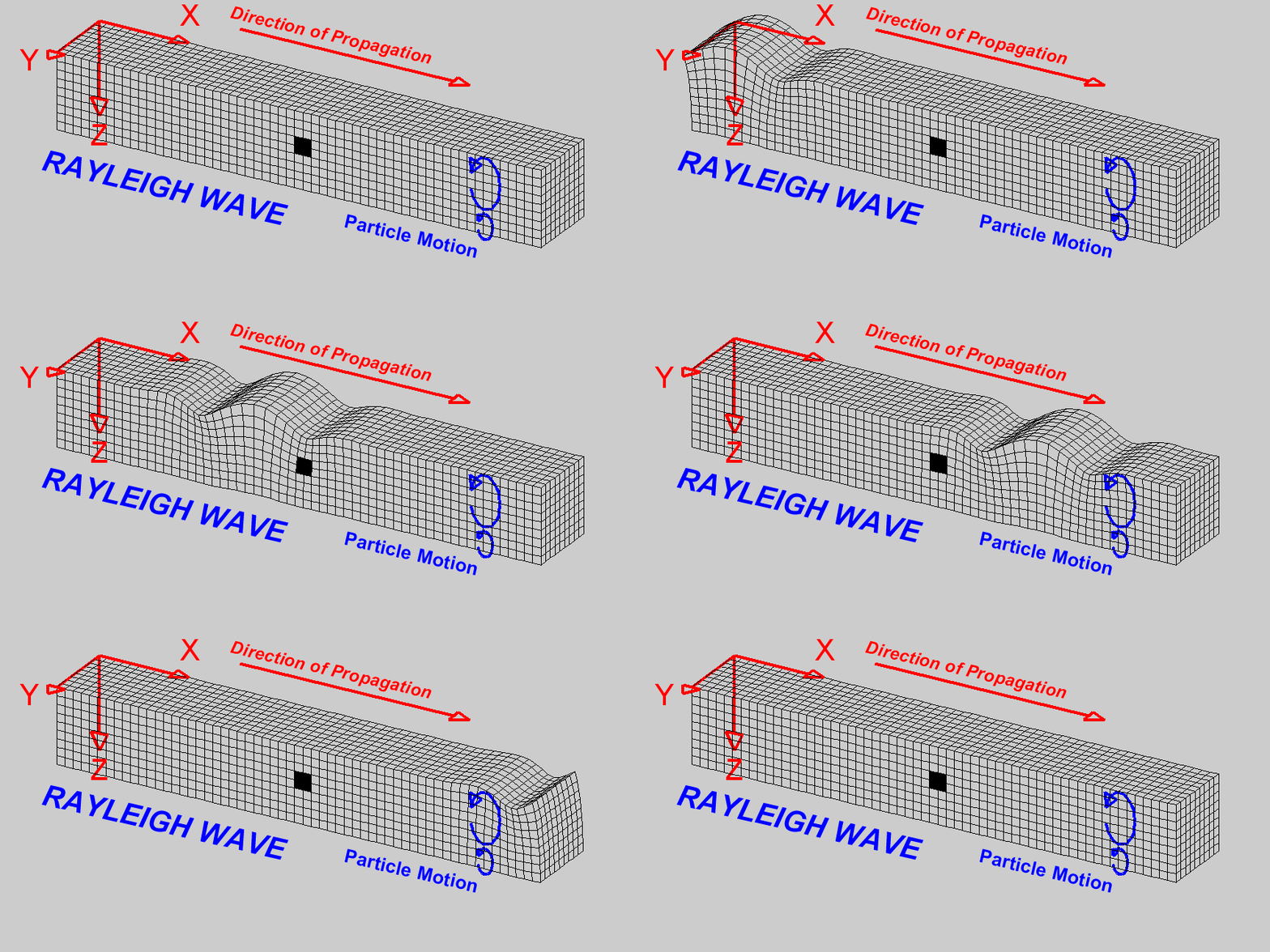
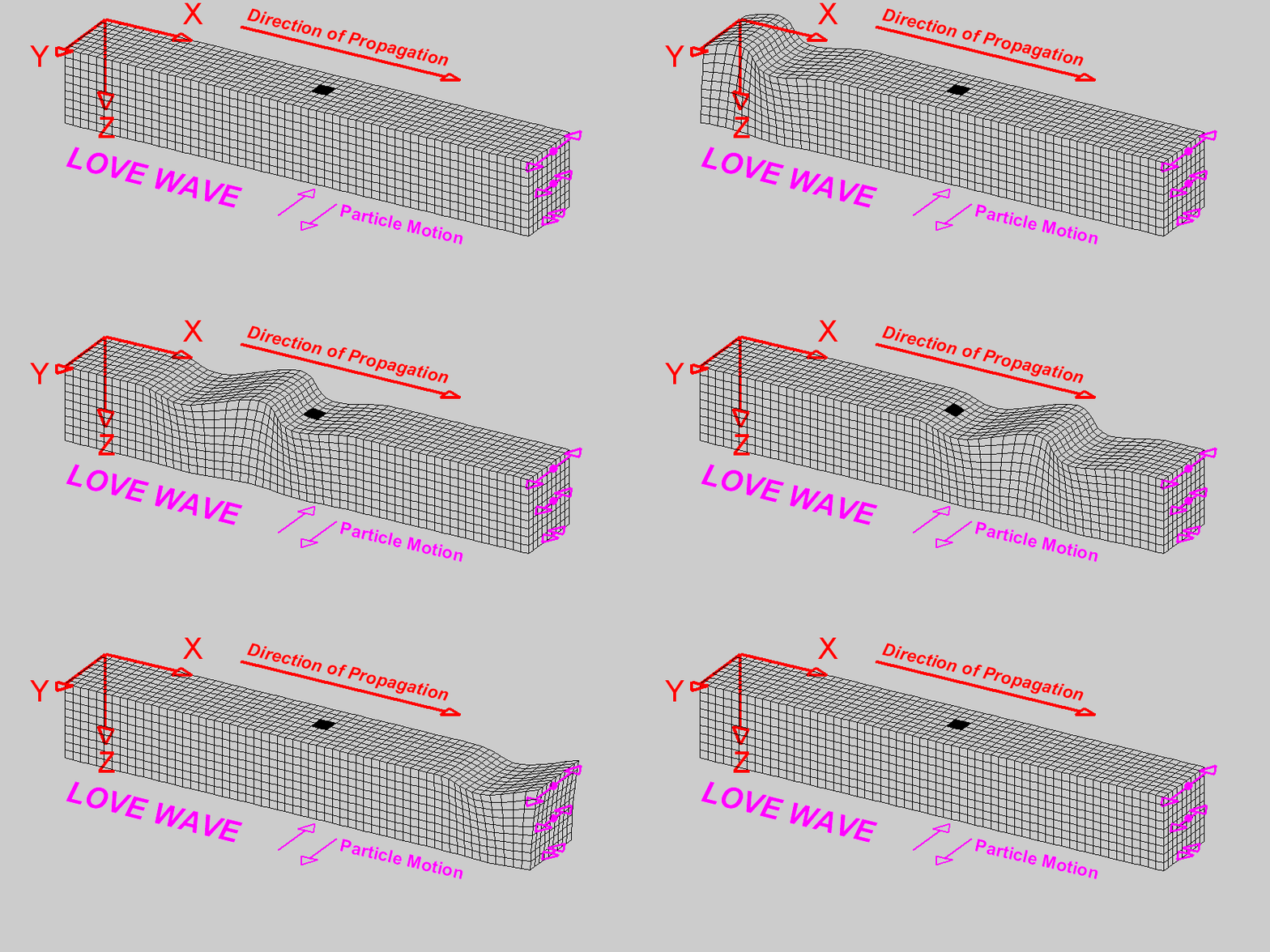
03Ball-on-bar impact
The contact between the ball and the end of the bar follows Hertz: the contact force grows with the 3/2 power of the approach of ball and bar,
The ball (mass ) is slowed by , while the bar end moves away at . Together these give the equation for the approach during contact, and the stress pulse sent into the bar:
04Stepped bars
At a change of section from to , force balance and continuity of velocity split the incident pulse into a transmitted and a reflected part:
A step down in section amplifies the transmitted stress; a step up reduces it.
05Expected pulses
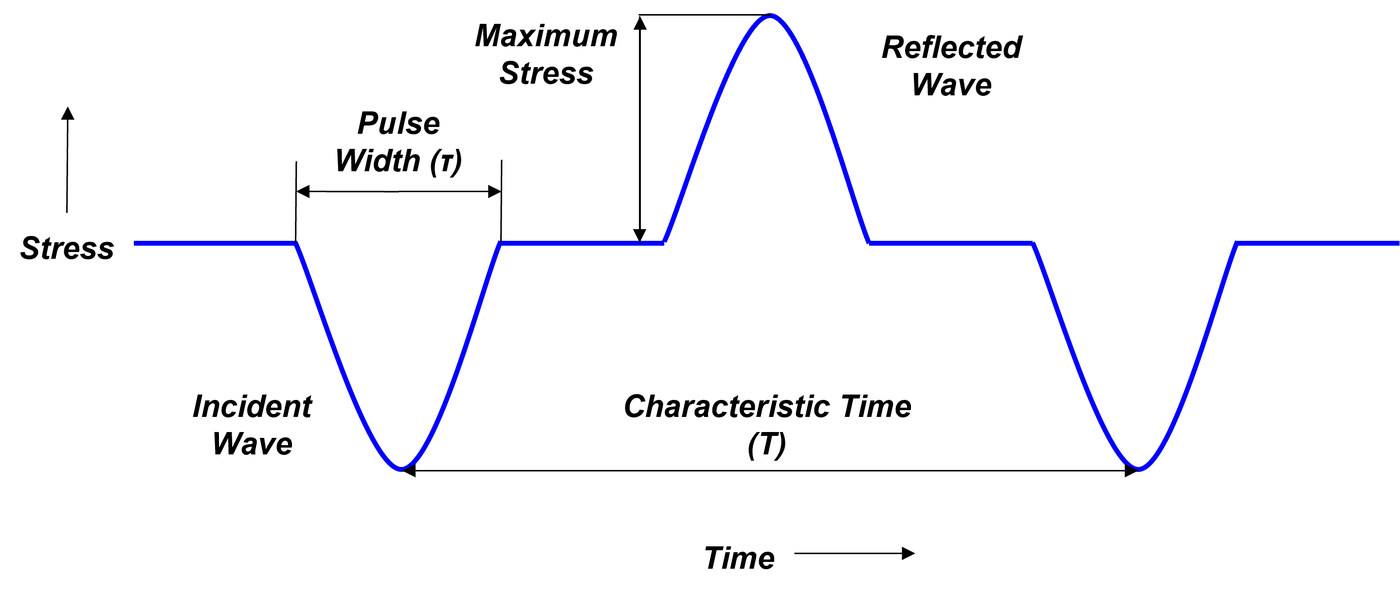
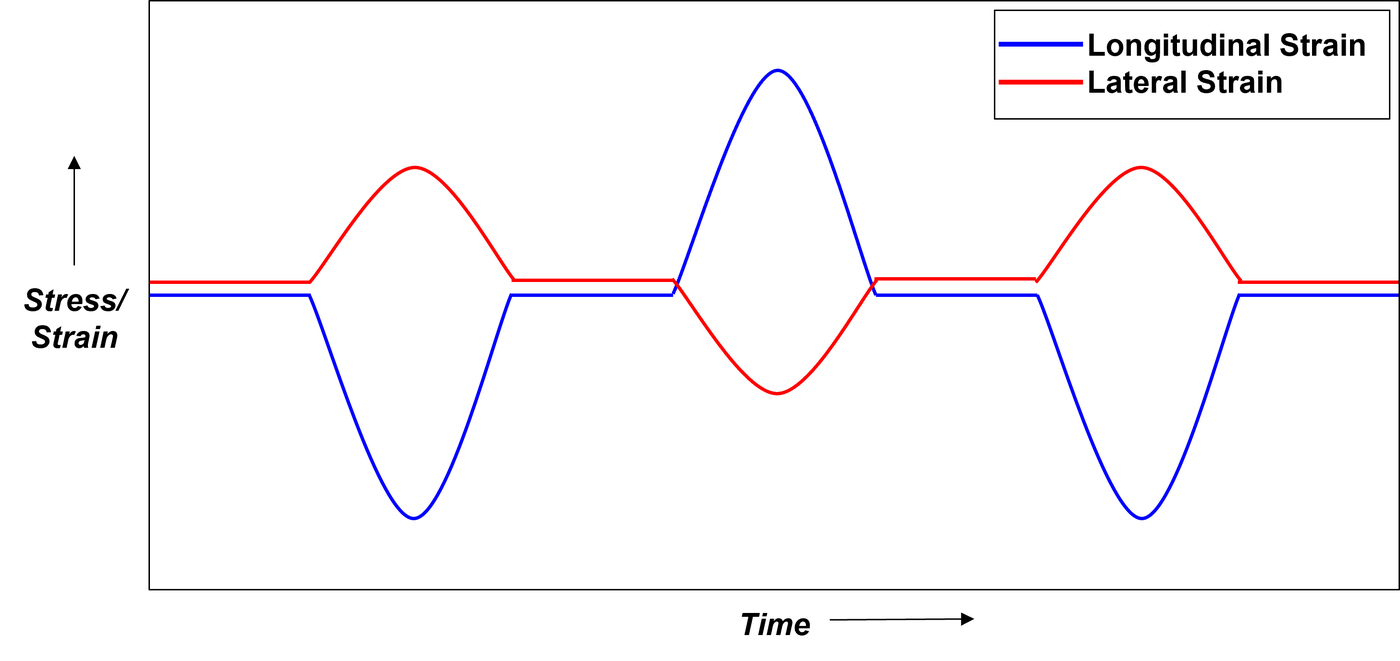
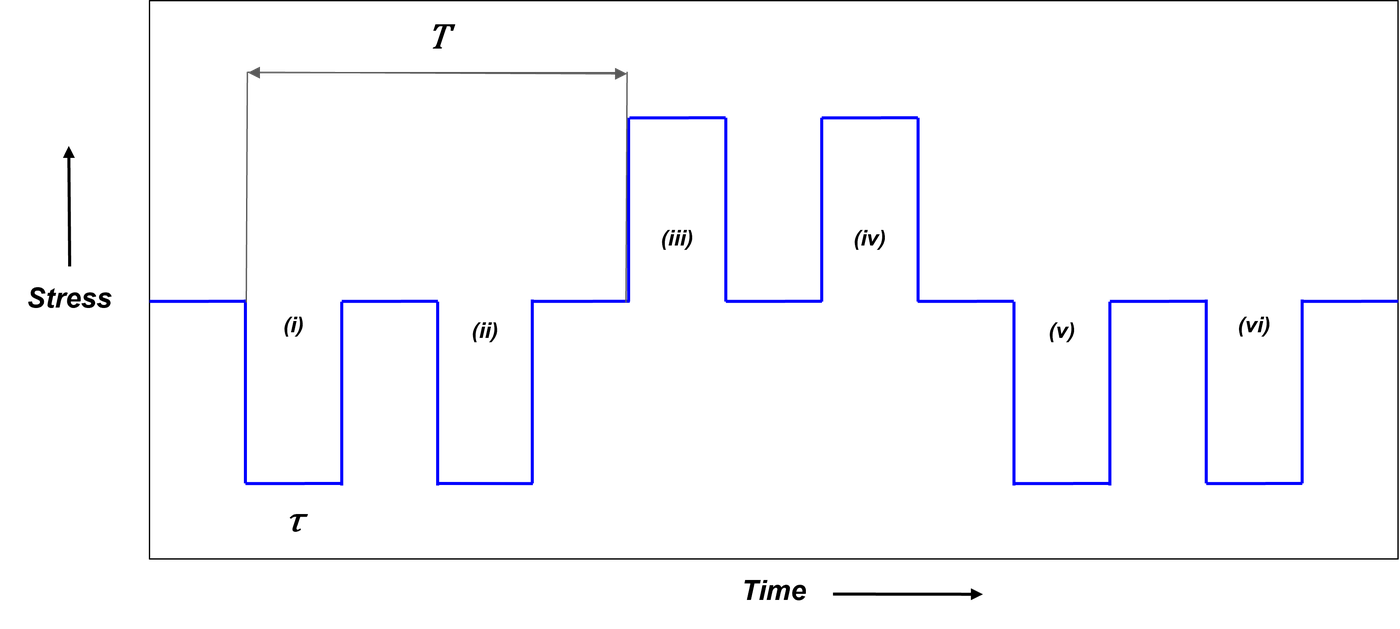
A ball sends a compressive pulse down the bar; it reflects from the free far end as tension. A spherical wave starts at the contact point and becomes a plane wave within a few bar diameters. The contact time is the pulse width , and one round trip takes the characteristic time . The axial pulse comes with a lateral pulse through the Poisson effect; their ratio is Poisson's ratio.
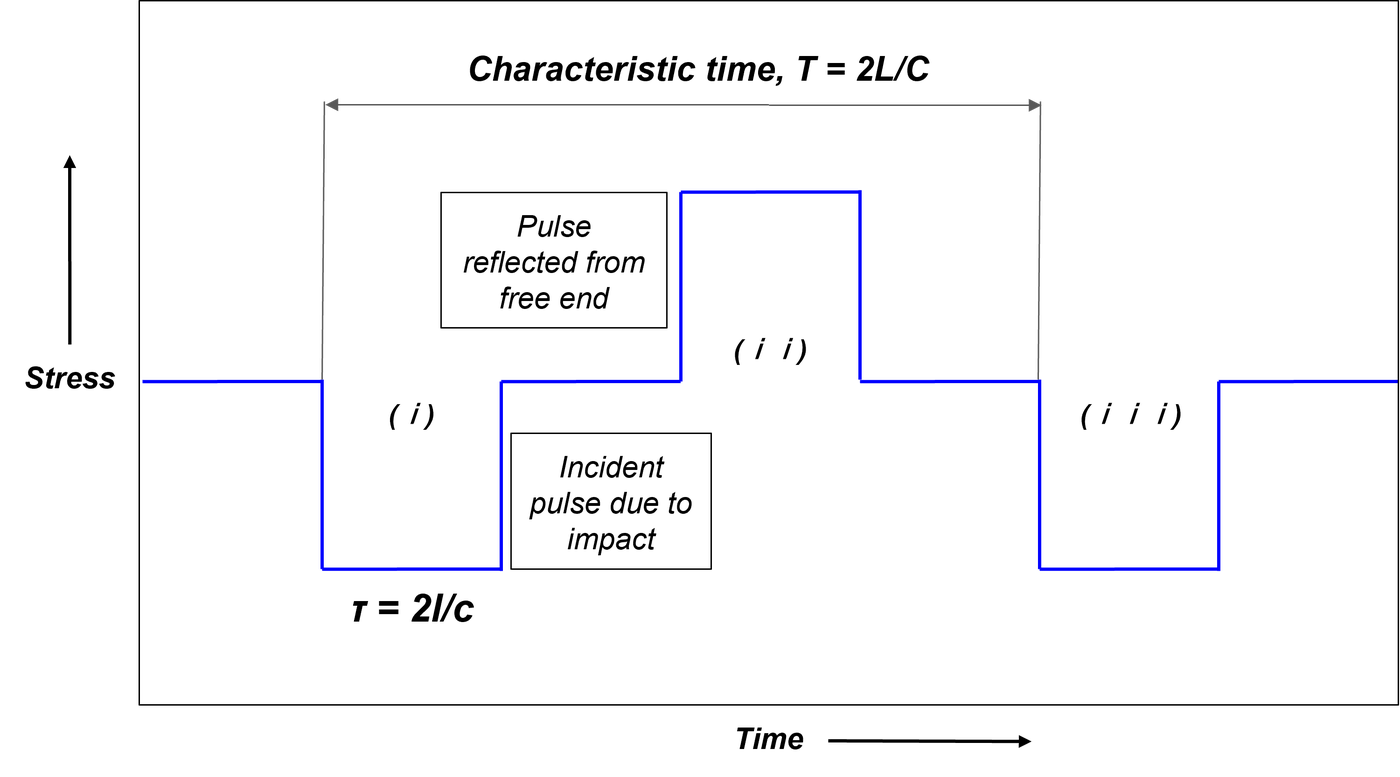
A bar striking a bar gives a rectangular pulse. With a free far end it returns as tension; with a fixed end it returns as compression, and it keeps re-reflecting until damping removes it.
06Experiment
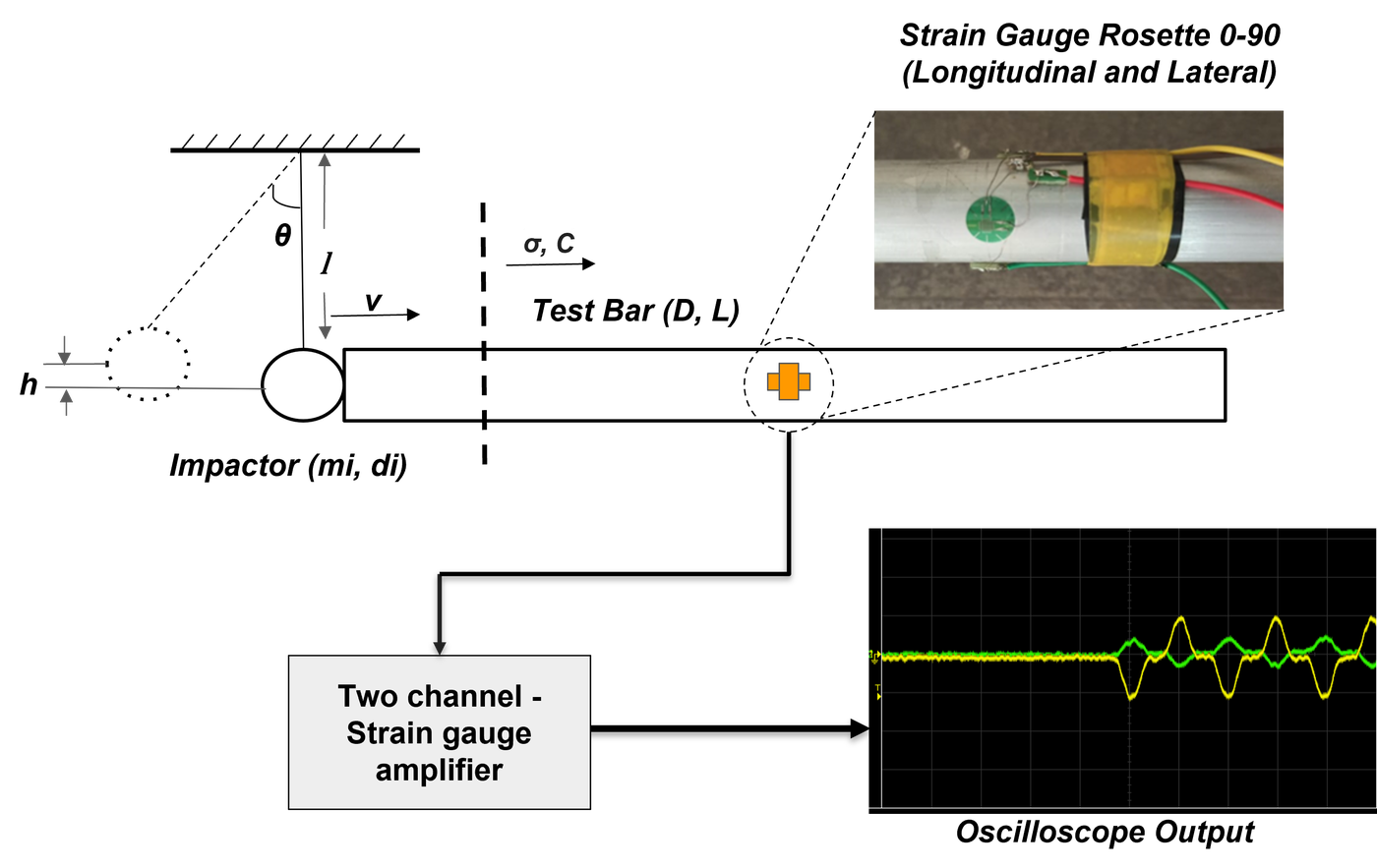
A steel bar, 20 mm in diameter and 1.2 m long, hangs level from nylon threads. A 30 mm steel ball hangs as a pendulum, just touching the centre of the bar end. A 0/90° strain-gauge rosette (3 mm gauge length, 350 Ω, gauge factor 2.16) at mid-length senses axial and circumferential strain; each gauge is one arm of its own quarter bridge, fed by a two-channel amplifier and recorded on a digital storage oscilloscope.
The ball is pulled back to angle on a string of length and released, so it strikes at
07Tests
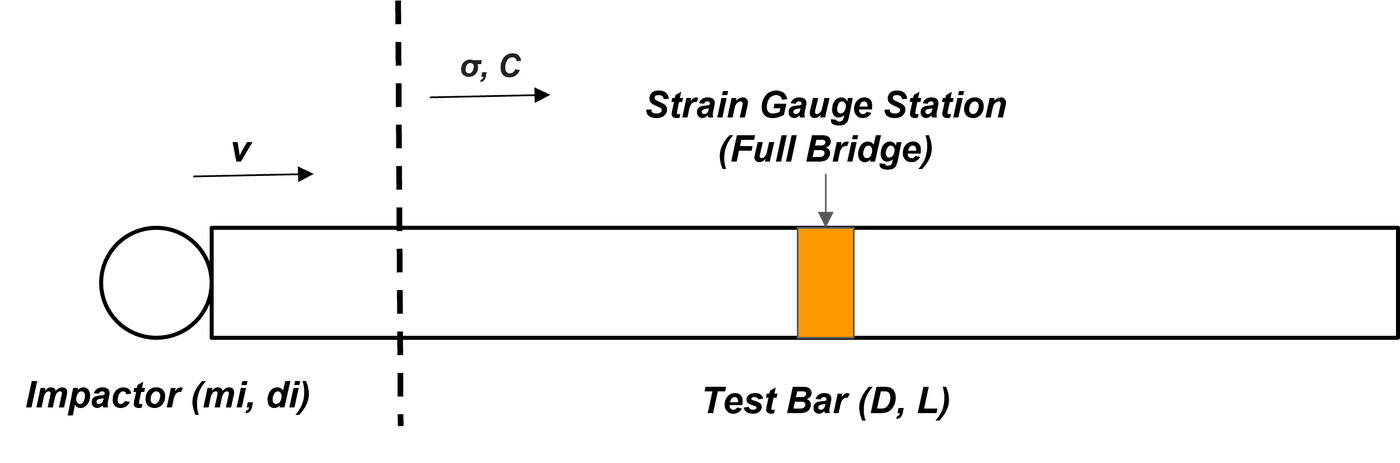
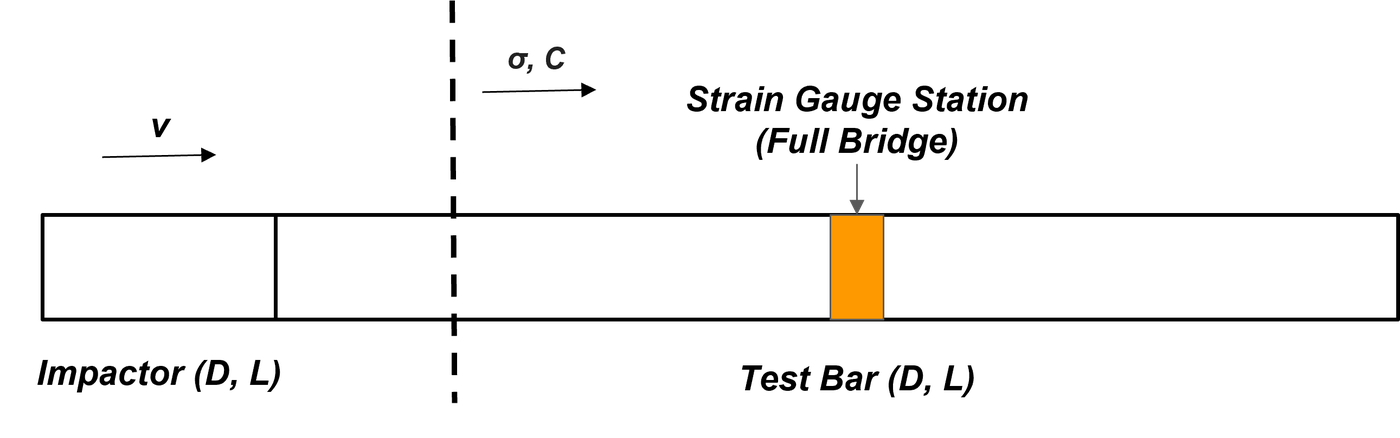
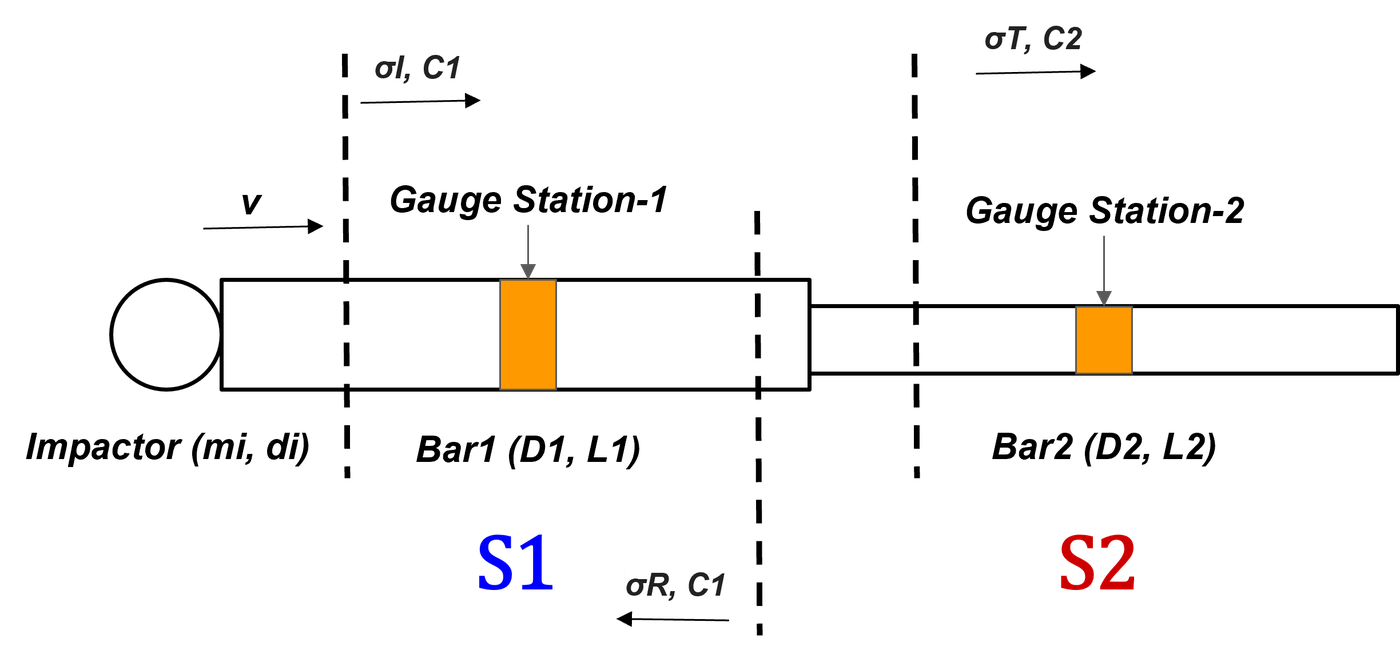
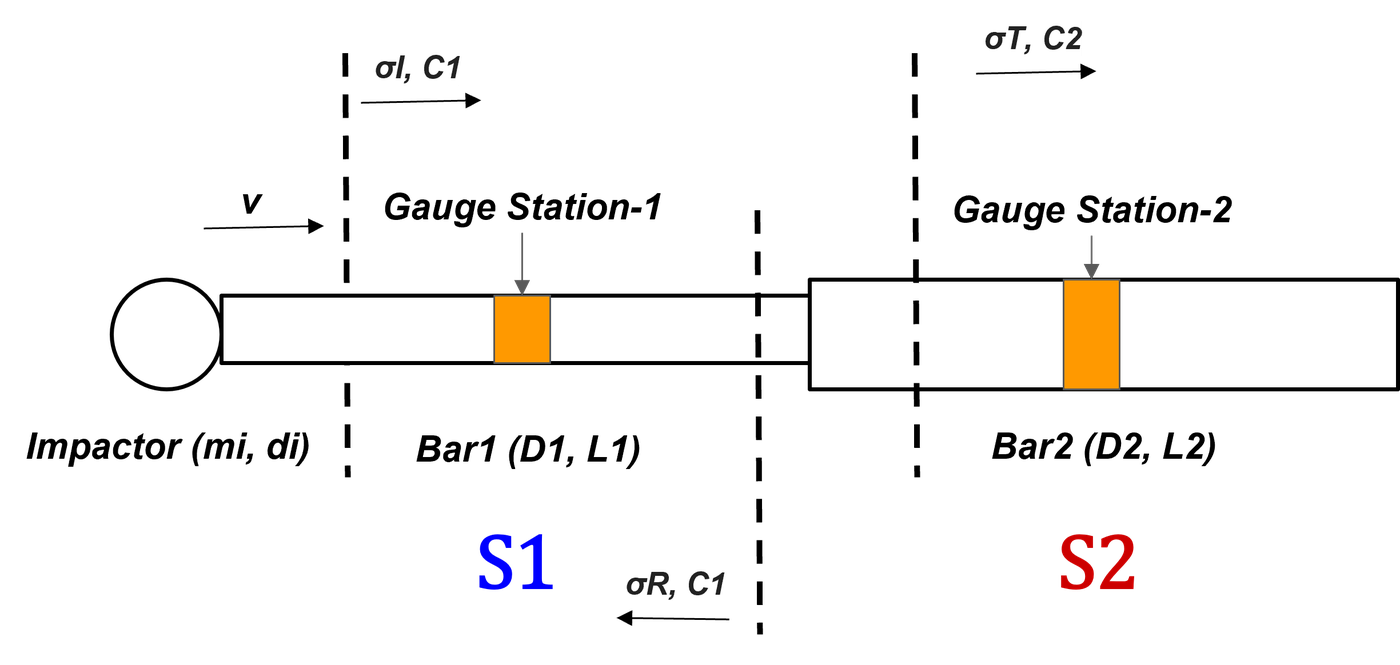
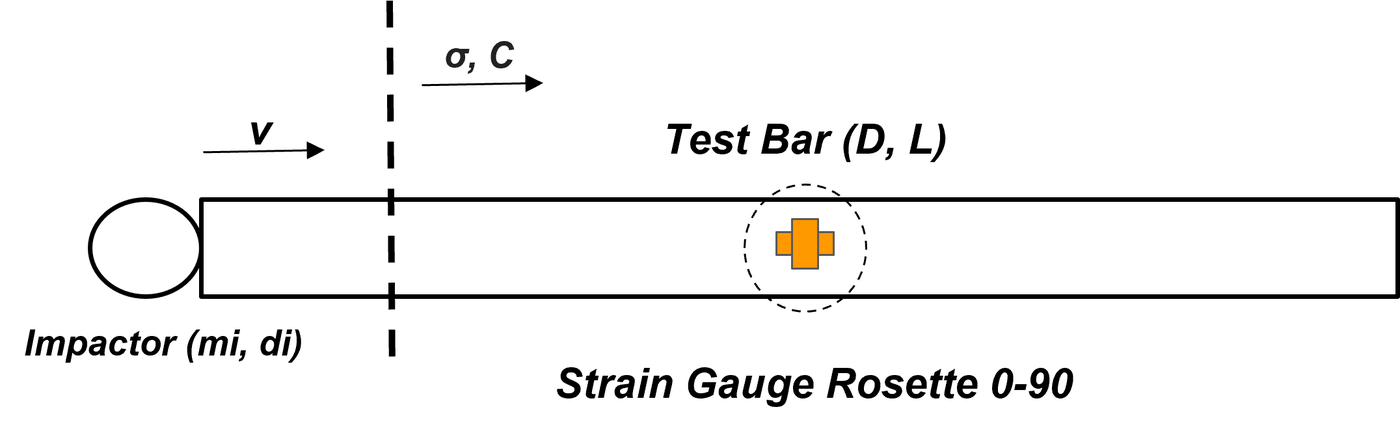
The recorded traces matched the expected pulse shapes: separate incident and reflected pulses on the long bar, the change in amplitude at each step, and a lateral pulse in phase with the axial one.
08Material properties from the waves
The same test is a non-destructive way to characterise an elastic material. Poisson's ratio is the ratio of the peak lateral to the peak axial strain; the wave speed comes from the round-trip time read off the strain record, and with the density gives Young's modulus:
09References
- Kolsky, H. (1963). Stress Waves in Solids. Dover.
- Mendonca, E. V., Shahapur, P. B., and Reddy, T. Y. (2019). Elementary experimental studies on stress wave propagation in bars.